
SHEIN
What broke SHEIN's $100B machine?
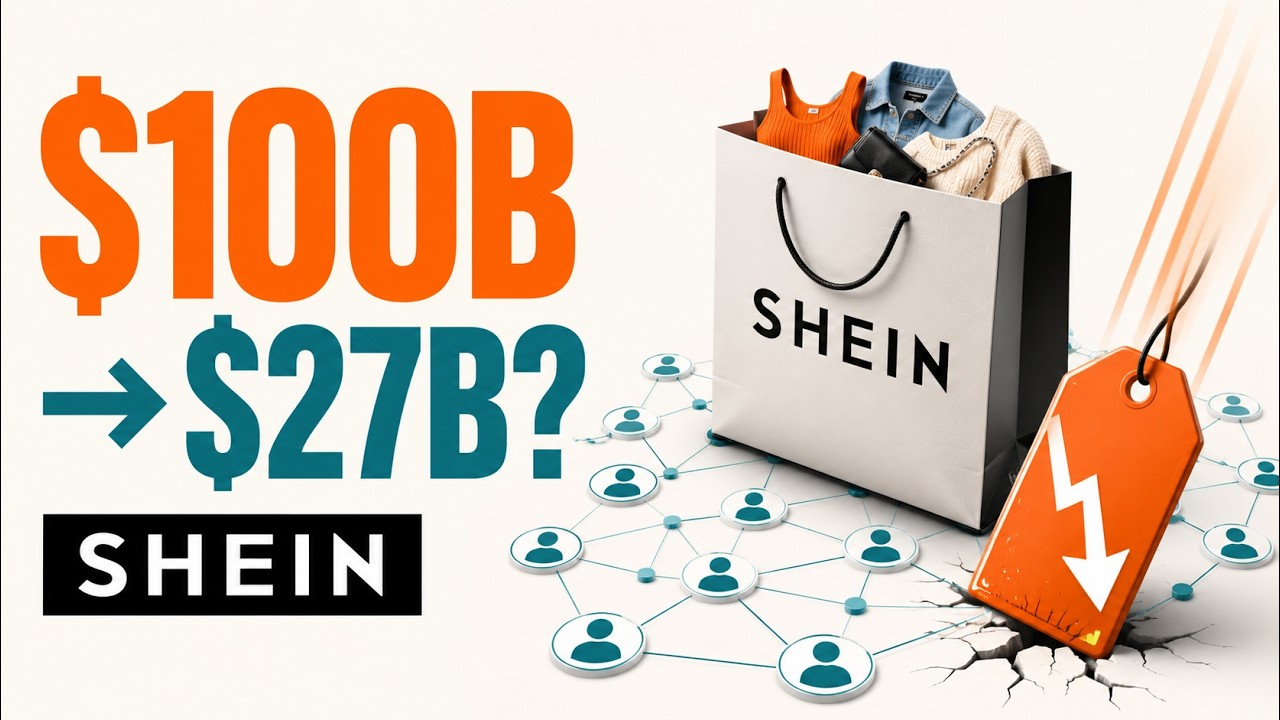
A strong platform loop can survive while regulation reprices the economics
SHEIN's demand-to-production loop can keep getting stronger even while the business becomes less valuable at the margin. More customers, more orders and digitally connected Makers do not neutralise an external tariff or customs shock. Platform advantage therefore depends not only on how efficiently the network coordinates supply and demand, but also on the rules that determine the cost of moving the Core Value Unit across borders.
Structured data behind the canvas
One fixed table for every PBMC. Transaction remains one field; all transaction arrows and their explanations stay inside that field, so cases remain directly comparable.
| Perspective | Field | Value | Explanation |
|---|---|---|---|
| Core Value Unit | Core Value Unit | Style | At the center is the Style. Here, a style means a specific fashion design or variation that a shopper can discover and buy. SHEIN can test a style in a tiny batch, observe demand, and scale only the ones that work. |
| Owner | Actor | SHEIN | The Owner is SHEIN. It controls the customer interface and orchestrates the information, production and fulfilment system. |
| Owner | Job | Match Demand | Its central job is to Match Demand. SHEIN calls the system LATR: Large-scale Automated Test and Reorder. A new style can start with only about one hundred to two hundred items. SHEIN watches the response in real time and can reorder winning products in as few as five days. |
| Owner | Gain | Growth / Margin | If that loop works, SHEIN gets Growth and Margin: more orders, less unsold inventory and less capital trapped in the wrong products. |
| Owner | Pain | Tariffs | The pain that matters most now is Tariffs. SHEIN can optimise production extremely well and still be hit when governments make cross-border imports more expensive. |
| Owner | Transaction | Buy / Sell ← Consumer · PaymentWhen the Shopper buys, Payment flows into SHEIN's selling system. The same interaction also creates the demand data used by the on-demand model. → Consumer · ProductIn return, the Shopper receives the Product SHEIN sold, even though logistics partners handle the physical delivery. ← Provider · SupplyMakers send Supply back into SHEIN's system: finished goods and production capacity that the Owner can use to meet observed demand. → Provider · OrdersSHEIN sends production Orders to Makers. Its software can allocate those orders using factors such as expertise, price and capacity. → Partner · ParcelsProducts then enter the logistics network as Parcels that need warehousing, customs processing and transport. ← Partner · ServiceWhat SHEIN receives from Logistics is Service: fulfilment, transport and customs support that makes global delivery possible. | In the first-party model, SHEIN does something very retailer-like: it buys finished products from suppliers and sells them to Shoppers. |
| Owner | Governance | Price / Rules | It also controls Price and Rules: what shoppers pay, which suppliers qualify and what standards the supply chain has to meet. |
| Owner | Promotion Channel | Social / Ads | Growth is pushed through Social and Ads. SHEIN was an early user of online communities and influencers, and it also spends heavily on paid advertising. |
| Owner | Activities | Test / Route | The recurring Owner activities are Test and Route: test products in small batches, then route new orders and inventory toward the styles and markets showing demand. |
| Owner | Resources | Data / System | The key resources are Data and System: customer-demand information plus the software that links product testing, factories, inventory and fulfilment. |
| Consumer | Actor | Shoppers | Start with the Consumers: Shoppers. These are people using SHEIN's app or website to discover and buy fashion and lifestyle products. |
| Consumer | Job | Find Style | Their basic job is simple: find a style they want without spending too much time or money. |
| Consumer | Gain | Low Price | The most important gain for this story is Low Price. SHEIN's on-demand model is designed to keep production and inventory costs low enough to support very low retail prices. |
| Consumer | Pain | Fit / Trust | The trade-off is uncertainty. Online fashion shoppers still have to judge fit and whether a very low-priced item will meet their expectations. |
| Consumer | Transaction | Demand / Pay → Owner · PaymentWhen the Shopper buys, Payment flows into SHEIN's selling system. The same interaction also creates the demand data used by the on-demand model. ← Owner · ProductIn return, the Shopper receives the Product SHEIN sold, even though logistics partners handle the physical delivery. ← Partner · DeliveryThe first visible flow is Delivery. Logistics partners move the physical order to the Shopper. | Shoppers give the platform two things that matter: demand signals and payment. Searches, clicks and orders reveal what people want, while purchases turn that demand into revenue. |
| Consumer | Filter | Market | Access depends partly on Market. Product availability, prices, duties and local rules differ across the roughly one hundred and sixty markets SHEIN serves. |
| Consumer | Access Channel | App / Web | Shoppers access SHEIN through its app or website, where they discover a constantly changing selection of products. |
| Consumer | Activities | Browse / Buy | They repeatedly browse, compare and buy. That repeated behavior is what keeps fresh demand data flowing into the system. |
| Consumer | Resources | Taste / Data | What do Shoppers bring? Their taste and their data. Preferences, clicks and purchases help SHEIN see which styles deserve more supply. |
| Provider | Actor | Makers | On the Provider side are Makers. By Makers, I mean SHEIN's contract manufacturers. They do not sell directly to the shopper. SHEIN sits in the middle and decides what gets produced. |
| Provider | Job | Win Orders | Their job is to win production orders and keep their factories busy. |
| Provider | Gain | Volume / Scale | The upside is Volume and Scale. SHEIN says repeated small-batch orders can improve capacity utilisation and returns for manufacturing partners. |
| Provider | Pain | Cost / Rules | Their pain is Cost and Rules. They have to produce cheaply while meeting SHEIN's quality, labor and compliance standards. |
| Provider | Transaction | Orders / Goods → Owner · SupplyMakers send Supply back into SHEIN's system: finished goods and production capacity that the Owner can use to meet observed demand. ← Owner · OrdersSHEIN sends production Orders to Makers. Its software can allocate those orders using factors such as expertise, price and capacity. | The exchange is straightforward: Makers receive production Orders and return finished Goods. |
| Provider | Filter | Standards | The gate is Standards. Suppliers are audited and can be monitored, suspended or terminated when they fail SHEIN's requirements. |
| Provider | Access Channel | Software | Makers connect through SHEIN's production software. It links orders, production, quality checks and shipping. That is what allows SHEIN to turn demand data into production decisions so quickly. |
| Provider | Activities | Make / Ship | Their recurring work is to make the selected products and ship them into SHEIN's fulfilment system. |
| Provider | Resources | Plants / Skill | They bring factories and manufacturing skill. SHEIN does not need to own thousands of garment factories itself. |
| Partner | Actor | Logistics | A real enabling Partner is Logistics: warehouse operators, freight companies and delivery providers that move products from production to customers around the world. |
| Partner | Job | Move Fast | Their job is to move parcels quickly enough for an ultra-fast fashion model to still feel convenient. |
| Partner | Gain | Volume | The gain is Volume. More SHEIN orders mean more warehousing, customs and delivery work flowing through logistics networks. |
| Partner | Pain | Cost / Customs | Their key pain is Cost and Customs. Border duties, documentation and freight complexity can make every parcel slower or more expensive. |
| Partner | Transaction | Ship / Clear → Consumer · DeliveryThe first visible flow is Delivery. Logistics partners move the physical order to the Shopper. ← Owner · ParcelsProducts then enter the logistics network as Parcels that need warehousing, customs processing and transport. → Owner · ServiceWhat SHEIN receives from Logistics is Service: fulfilment, transport and customs support that makes global delivery possible. | The Partner transaction is Ship and Clear: move the parcel and get it through the border. |
| Partner | Filter | Rules | Logistics is constrained by customs and transport Rules in every destination market. |
| Partner | Access Channel | Network | They connect through a global logistics Network of warehouses, routes and service providers. |
| Partner | Activities | Move / Clear | Their repeated work is moving products and clearing shipments. |
| Partner | Resources | Hubs / Routes | They contribute hubs, routes and physical delivery capacity. |
Sources
Sources document the platform mechanics and factual case context. The PBMC mapping and Platform Lesson are Platform Generation's analysis.
- 01SHEIN official brand guidance ↗
Official SHEIN Creator Center instructs creators to pronounce the brand SHE-IN. Spoken production fields use 'SHEIN'; visible fields retain canonical 'SHEIN'.
- 02SHEIN Hong Kong IPO valuation reporting ↗
Independent reporting used for the IPO valuation context.
- 03SHEIN Hong Kong listing prospectus / application materials ↗
Primary source for the operating model, customers, manufacturers, product range, revenue, margins and marketplace mechanics.
- 04Further amendment to duties on low-value imports from China ↗
Policy source for the U.S. low-value import / tariff shock.
- 05Customs duty on small parcels ↗
Policy source for the EU customs change affecting low-value parcels.
Use it. Cite it. Build on it.
The case-specific analysis and structured data are available under CC BY 4.0. You may cite, copy, analyze and adapt the case materials with attribution.
The Platform Business Model Canvas (PBMC) canvas/template is available under CC BY-SA 4.0. You may reproduce, teach with, use commercially and adapt it, provided clear attribution to the original PBMC remains and adapted versions are shared under the same license.
An unmodified Official PBMC should retain its displayed provenance rather than having Platform Generation attribution removed or replaced. An adapted version may carry your own branding, but the PBMC attribution must remain clearly visible and the adaptation must not be presented as an Official PBMC.
Platform Generation logos and the Official PBMC designation are not included in the Creative Commons licenses and may not be used to imply endorsement by Platform Generation.
BibTeX
@misc{eisape2026sheinpbmc,
  author       = {Eisape, Davis Adedayo},
  title        = {SHEIN --- Platform Business Model Canvas},
  howpublished = {Platform Generation PBMC Library},
  year         = {2026},
  month        = aug,
  url          = {https://platformgeneration.com/shein/},
  note         = {PBMC snapshot, August 2026. Case-specific analysis/data: CC BY 4.0. PBMC canvas/template: CC BY-SA 4.0 with attribution. Platform Generation logos and Official PBMC designation are excluded from the Creative Commons licenses. Available at: https://platformgeneration.com/shein/}
}